 Jewelry Identifier
How to Tell if Silver Is Real: 7 Simple Tests
You found a silver-looking bracelet in a drawer. Or you're at a flea market, staring at a tray of rings priced at $40 each. The vendor says they're sterling silver. Maybe they are. Maybe they're nickel with a shiny coating.
Real sterling silver holds value. Silver-plated metal is worth almost nothing. Here's how to tell the difference using seven tests, ordered from quickest to most conclusive.
What "Real Silver" Actually Means
Sterling silver is 92.5% pure silver mixed with 7.5% other metals (usually copper) for durability. Pure silver (99.9%) is too soft for most jewelry. When people say "real silver," they typically mean sterling.
Silver-plated jewelry has a thin silver coating over a base metal like brass, copper, or nickel. It looks identical to sterling when new but wears through over time, revealing the metal underneath.
Test 1: Check for Stamps and Hallmarks
This is always your first step. Look inside rings, on clasp tags, behind pendants, and on earring posts. Use a magnifying glass or your phone's camera zoom.
Stamps that mean real silver:
- 925 or .925 — sterling silver (92.5% pure)
- STERLING — same thing, spelled out
- 950 — Britannia silver (95% pure, less common)
- 900 or 800 — coin silver or European silver (lower purity but still real)
- A lion passant — British hallmark for sterling silver
Stamps that mean NOT solid silver:
- EP or EPNS — electroplated nickel silver (just a coating)
- Silver plated — exactly what it says
- Alpaca or German silver — contains no silver at all; it's a nickel-copper-zinc alloy
- Nickel silver — also zero silver content despite the name
No stamp doesn't automatically mean fake. Handmade pieces, very old jewelry, and some international items lack stamps entirely. But if something's sold as sterling and has no mark, that's worth questioning. For a deeper look at what all those tiny numbers and symbols mean, check out our complete guide to jewelry stamps and hallmarks.
Test 2: The Magnet Test
Silver is not magnetic. Grab a strong magnet — not a fridge magnet, which is too weak. Neodymium magnets (available at hardware stores for a few dollars) work best.
Hold the magnet against the piece. If it sticks firmly, the piece is steel or iron with a silver coating. Real silver shows no attraction at all.
One catch: some base metals used in counterfeits (brass, copper) are also non-magnetic. Passing the magnet test doesn't confirm silver. It eliminates the cheapest fakes.
Test 3: The Ice Test
Silver has the highest thermal conductivity of any metal. Place an ice cube directly on the piece and watch what happens.
On real silver, the ice starts melting immediately — noticeably faster than it would on a table or on stainless steel. The silver pulls heat from the surrounding air and transfers it into the ice at a remarkable rate.
This test works best with flat pieces like bangles or larger pendants. It's harder to judge with thin chains or small rings where there's less surface contact.
Test 4: The Tarnish Check
Real silver tarnishes. It reacts with sulfur compounds in the air, forming a dark layer of silver sulfide on the surface. This is actually a positive sign.
If a piece has been sitting in a drawer for months or years and still looks perfectly shiny with no darkening whatsoever, it might be stainless steel, nickel alloy, or silver-plated metal that tarnished and was re-coated.
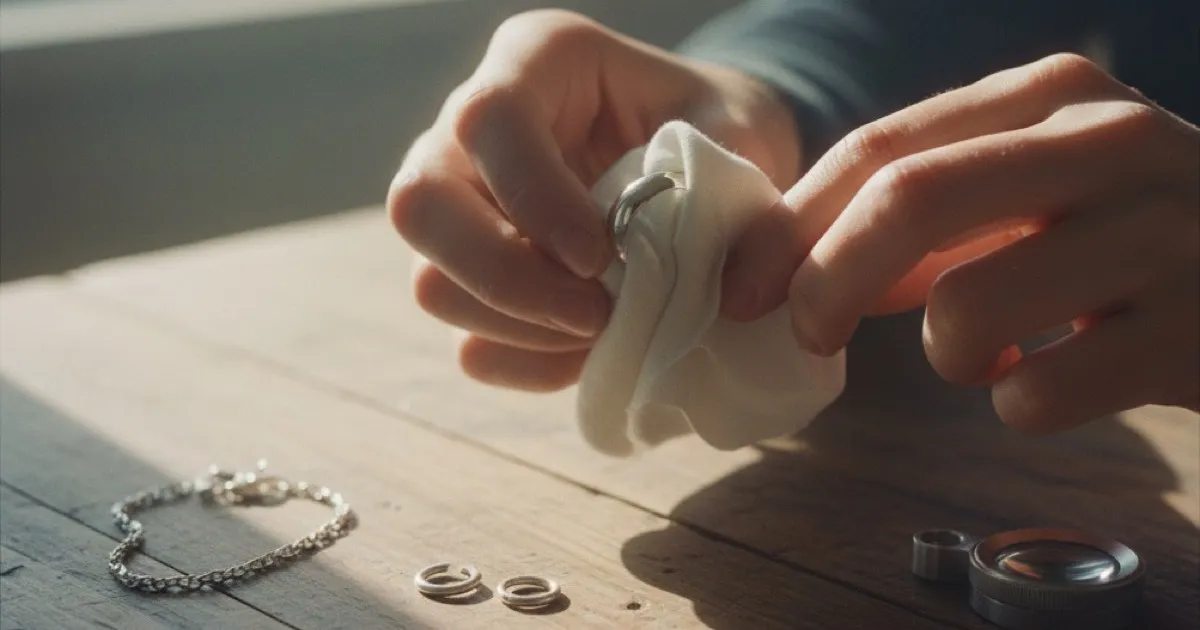
You can also rub the piece with a clean white cloth. Sterling silver leaves faint black marks on the cloth — that's the tarnish transferring. No marks at all suggests it's not silver.
Test 5: The Sound Test
Silver produces a distinctive, high-pitched ring when tapped gently against another hard object. It's a clear, sustained tone that lasts a couple of seconds — almost musical.
Base metals and plated pieces produce a shorter, duller thud. The difference becomes obvious once you've heard both, but this test takes some practice.
Try tapping the piece lightly with a coin. Sterling rings. Plated metal thuds.
Test 6: The Smell Test
Silver is odorless. Hold the piece close to your nose. If it smells metallic — like copper pennies or iron — it's not sterling silver. The smell comes from the base metals underneath the plating or from the non-silver alloy.
This test is surprisingly useful for bracelets and necklaces that have been worn against skin, where body heat and sweat bring out the base metal smell more strongly.
Test 7: The Acid Test
This is the most conclusive home test. Silver testing kits (about $10-15 online) contain nitric acid solutions calibrated for different purities.
Make a small scratch on an inconspicuous area and apply a drop of the testing solution. Real sterling silver turns a creamy white color. Silver-plated items show a green reaction (from the copper or brass underneath). Non-silver metals turn other colors depending on their composition.
The downside: acid tests leave a small mark. Use them on hidden spots — the inside of a bracelet, the back of a pendant, under a clasp.
How to Check Silver Jewelry With Your Phone
If you're sorting through a collection and want quick answers before running physical tests, AI identification apps like Jewelry Identifier can analyze photos of your pieces. Point your camera at the jewelry, and the AI identifies the metal type, reads any stamps or hallmarks, and provides an estimated value.
This works well as a first filter — especially when you have multiple pieces to sort through. It's faster than testing each piece individually with acid or ice, and it catches the obvious fakes before you invest time in detailed testing. You get 2 free identifications per day.
What Real Silver Is Worth
Silver's value depends on weight and purity. At current market prices, sterling silver is worth roughly $0.75-1.00 per gram for melt value alone. A typical sterling silver ring weighing 5-8 grams has $4-8 in raw silver content.
But jewelry is almost always worth more than melt value. Brand, craftsmanship, age, and design all add premiums. A Tiffany sterling bracelet is worth far more than its silver weight. A handmade artisan piece commands a premium over mass-produced sterling. If you're trying to figure out what your piece is actually worth, our guide on how to determine jewelry value covers the five factors that matter most.
Silver-plated pieces, by contrast, have essentially zero precious metal value. The plating is microns thick and can't be economically recovered.
Silver vs. Other White Metals
Silver isn't the only white-colored metal in jewelry. White gold, platinum, and stainless steel all share that silvery appearance, which causes confusion. Here's how to tell them apart quickly.
Silver vs. white gold: White gold is heavier for its size and doesn't tarnish. It's typically stamped 10K, 14K, or 18K. Sterling silver is stamped 925. If there's no stamp, the weight test helps. White gold feels noticeably denser in your hand.
Silver vs. platinum: Platinum is much heavier than silver and carries stamps like Pt950 or PLAT. Platinum doesn't tarnish and has a slightly darker, more gray tone than silver's bright white.
Silver vs. stainless steel: Stainless steel is magnetic (use the magnet test), doesn't tarnish, and feels lighter than silver. It's also much harder to scratch. Most stainless steel jewelry has no precious metal stamp.
If you're dealing with multiple metals and can't tell them apart by stamps alone, our real vs. fake jewelry guide walks through testing methods for gold, diamonds, and gemstones alongside silver.
Frequently Asked Questions
Can 925 silver be fake?
Rarely, but yes. Some counterfeit pieces carry fake 925 stamps. If the price seems too low or the seller is unverifiable, test the piece beyond just the stamp. Genuine 925 silver passes the magnet, ice, and tarnish tests.
Does real silver turn black?
Yes. Tarnishing is normal for sterling silver and actually confirms authenticity. The black layer is silver sulfide, formed by exposure to sulfur in the air. It cleans off easily with a polishing cloth or silver cleaner.
Is silver-plated jewelry worth anything?
As precious metal, no. The silver layer is too thin to have melt value. But some silver-plated pieces have collectible value — vintage silverplate from known manufacturers like Rogers, Reed & Barton, or Christofle can sell for $10-50+ depending on the piece.
What's the difference between 925 and 950 silver?
It's the purity. 925 (sterling) is 92.5% silver. 950 (Britannia) is 95% silver. Britannia silver is slightly softer and has a slightly whiter color. Both are considered "real silver." Sterling is far more common in jewelry.
Start with the stamp check and magnet test — they take 30 seconds combined and catch most fakes. If those pass, the ice and tarnish tests add confidence. For anything valuable, the acid test or a professional jeweler gives you certainty. And if you want a quick digital check, Jewelry Identifier can read stamps and identify metals from a photo in seconds.