 Jewelry Identifier
How to Clean Jewelry: A Guide by Metal and Stone Type
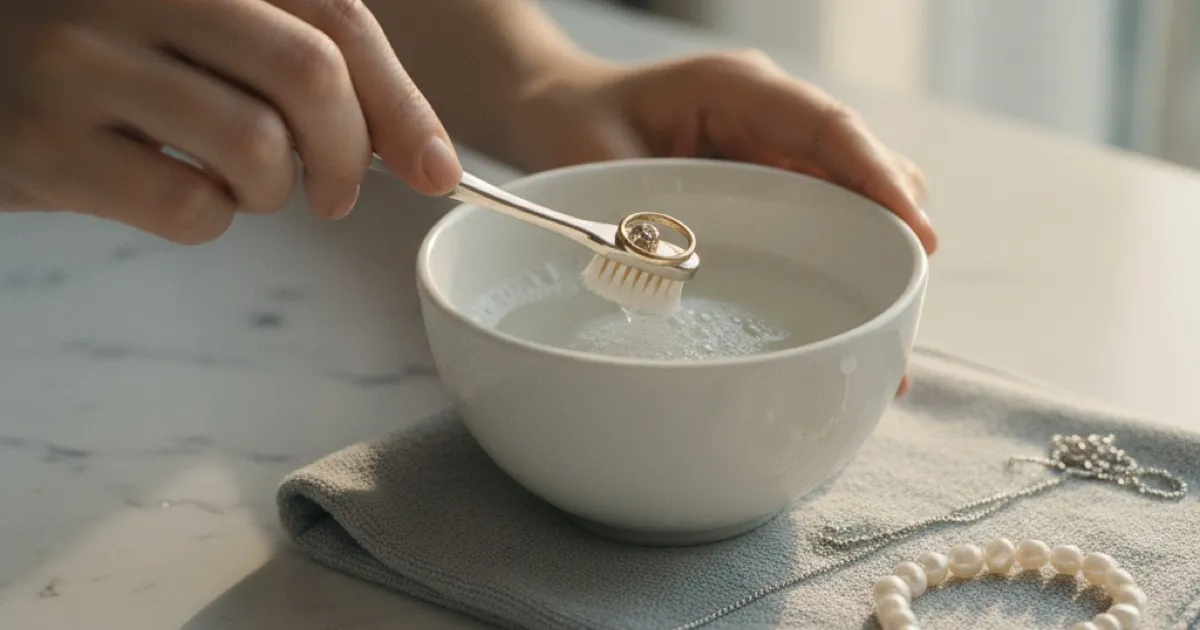
Dirty jewelry isn't just unattractive. Built-up grime, skin oils, and chemical residue dull the finish, hide hallmarks, and can even accelerate tarnish or corrosion on certain metals. The problem is that cleaning methods that work on gold can destroy pearls, and what's safe for diamonds can pit softer stones like opals.
This jewelry cleaning guide breaks down the right approach for every common metal and gemstone type, what to avoid, and when a piece needs professional attention instead.
The safest universal method for cleaning most jewelry is a soak in lukewarm water with a few drops of mild dish soap for 15-20 minutes, followed by gentle brushing with a soft-bristle toothbrush and thorough rinsing. This works for gold, platinum, diamonds, sapphires, and rubies. However, porous and delicate materials like pearls, opals, emeralds, turquoise, and coral require different care and should never be soaked or exposed to chemicals.
Cleaning by Metal Type
Different metals react differently to cleaning agents, water, and abrasion. Using the wrong method can remove plating, cause discoloration, or scratch the surface.
Gold (10K, 14K, 18K, 24K)
Gold is chemically stable and doesn't tarnish, but it collects oils and grime that dull its luster. Soak in warm water with mild dish soap for 15-20 minutes. Use a soft toothbrush to gently scrub around prongs, behind stones, and in textured areas. Rinse under lukewarm running water and pat dry with a lint-free cloth.
For stubborn buildup, add a teaspoon of baking soda to the soap solution. Avoid chlorine-based cleaners — chlorine attacks the alloy metals in 10K and 14K gold and can cause brittleness over time. Higher karat gold (18K, 24K) is softer, so use lighter pressure when brushing.
For more on testing and identifying your gold pieces, see our gold jewelry guide.
Sterling Silver
Silver tarnishes when it reacts with sulfur compounds in the air. Regular polishing with a dedicated silver polishing cloth removes light tarnish. For heavier tarnish, line a bowl with aluminum foil, add hot water and a tablespoon of baking soda, and place the silver piece in for 2-5 minutes. The electrochemical reaction transfers the tarnish from the silver to the foil.
Avoid rubber gloves (rubber contains sulfur), and don't use this method on silver pieces with intentional oxidized (darkened) finishes — it will strip the patina. For tips on verifying your silver, check our guide on how to tell if silver is real.
Platinum
Platinum is dense, durable, and resistant to tarnish. Clean it the same way as gold: warm water, mild soap, soft brush. Platinum develops a natural patina over time that some owners prefer. If you want the original shine back, a jeweler can polish it, but the patina is considered desirable by many collectors.
Gold-Plated and Gold-Filled
Gold-plated jewelry has a thin gold layer over base metal. Aggressive cleaning removes the plating. Wipe gently with a damp soft cloth, then dry immediately. Never soak gold-plated pieces for extended periods, and never use baking soda, toothpaste, or abrasive cloths. Gold-filled jewelry (thicker gold layer) can tolerate brief soaks, but gentle handling is still the rule.
Costume Jewelry and Base Metals
Costume jewelry uses brass, copper, zinc, or aluminum alloys that corrode easily. Wipe with a barely damp cloth and dry thoroughly. Never submerge costume jewelry — water trapped in settings or behind glued stones causes internal corrosion and loosens adhesives. Store pieces in airtight bags with anti-tarnish strips.
Cleaning by Gemstone Type
Gemstones vary widely in hardness, porosity, and sensitivity to chemicals. The Mohs hardness scale is your starting point: stones rated 7 or above tolerate soap-and-water cleaning well, while softer or porous stones need gentler methods.
Gemstone cleaning requires matching the method to the stone's specific vulnerabilities — hardness, porosity, heat sensitivity, and treatment status all matter. Diamonds, sapphires, and rubies (Mohs 9-10) handle ultrasonic cleaners and warm soapy water without issue. Emeralds (Mohs 7.5-8) are usually oil-treated to fill surface fractures, so ultrasonic cleaning or hot water can strip the oil and make existing fractures more visible. Pearls (Mohs 2.5-4.5) are organic and porous — they absorb chemicals, dry out in low humidity, and dissolve in acidic solutions. Opals contain up to 20% water and can crack if they dry out or experience sudden temperature changes. Turquoise is porous enough to absorb soap, skin oils, and cleaning chemicals, which permanently alter its color. The rule of thumb: if you're unsure about a stone's tolerance, wipe it with a damp cloth only and skip the soak.
Hard stones (Mohs 7+): Diamonds, Sapphires, Rubies, Topaz
Warm soapy water and a soft brush. These stones handle it well. Ultrasonic cleaners are generally safe for unfilled, untreated stones. Diamonds attract grease — a drop of ammonia in the cleaning solution cuts through oil films and restores sparkle. Rinse thoroughly.
Medium stones (Mohs 5-7): Turquoise, Opal, Lapis Lazuli, Peridot
Damp cloth only. No soaking, no chemicals, no ultrasonic cleaners. Turquoise and lapis are porous and absorb liquids, which changes their color permanently. Opals can crack from temperature shock, so never use hot water. Peridot tolerates a quick lukewarm rinse but not prolonged soaking.
Soft and organic materials (Mohs <5): Pearls, Coral, Amber
Wipe with a soft, barely damp cloth after each wearing. Pearls need moisture from skin contact to maintain their luster, but they can't handle perfume, hairspray, or cleaning solutions. Put pearls on last and take them off first. Amber dissolves in alcohol-based products. Coral scratches easily — store it separately. For pearl care details, see our guide on how to tell if pearls are real.
What to Avoid When Cleaning Jewelry
Some common cleaning shortcuts cause permanent damage.
- Toothpaste: Abrasive particles scratch softer metals and stones. Despite internet advice, toothpaste is too harsh for anything except very hard, unplated metals
- Bleach and chlorine: Attacks alloy metals in gold, causes pitting in silver, and can discolor certain gemstones
- Ultrasonic cleaners on treated stones: The vibrations can strip oil treatments from emeralds and crack filled or fracture-filled stones
- Hot water on temperature-sensitive stones: Opals, pearls, and tanzanite can crack from thermal shock
- Jewelry dips on porous stones: Chemical dips designed for gold and silver will stain or discolor turquoise, pearls, and coral
- Baking soda on plated jewelry: The mild abrasion removes thin gold or rhodium plating
When to Get Professional Cleaning
Home cleaning handles surface grime, but some situations need a jeweler's tools.
Take it to a professional when:
- Stones are loose in their settings (cleaning can dislodge them further)
- Heavy tarnish or corrosion covers hallmarks or identifying marks
- The piece has significant monetary or sentimental value and you're unsure about the metal or stone type
- You notice discoloration that doesn't respond to gentle cleaning
- Antique or estate pieces with unknown history — aggressive cleaning can reduce collector value
Professional ultrasonic and steam cleaning reaches areas a toothbrush can't. Most jewelers offer basic cleaning for free or at low cost, and they'll check prong integrity while the piece is in their hands.
How Jewelry Identifier Helps Before You Clean
Cleaning the wrong way can damage a piece permanently. The safest approach is knowing exactly what metal and stones you're dealing with before you start.
Jewelry Identifier lets you snap a photo of any piece and get an AI identification of the metal type, gemstone type, and any stamps or hallmarks. This tells you whether you're working with solid gold or gold-plated, real pearls or imitation, sterling silver or nickel alloy. With that information, you can pick the right cleaning method from this guide with confidence.
The app provides two free identifications per day and works offline, so you can check pieces even at an estate sale or flea market before purchasing. Knowing what a piece is made of also helps you estimate its value — a cleaned-up piece in good condition is worth more if you decide to sell.
Remember that the app provides AI-based estimates, not certified appraisals. For valuable pieces, confirm the identification with a jeweler before attempting any cleaning beyond a gentle wipe.
Frequently Asked Questions
Can I use an ultrasonic cleaner on all jewelry?
No. Ultrasonic cleaners are safe for hard, untreated stones like diamonds, sapphires, and rubies in solid gold or platinum settings. Avoid them for emeralds (oil treatment can be stripped), opals (can crack), pearls (surface damage), and any stone with fracture filling. When in doubt, stick to warm soapy water.
How often should I clean my jewelry?
Clean frequently worn pieces every two weeks with a gentle soap-and-water soak. Pieces worn daily (like engagement rings) benefit from weekly cleaning since hand lotion, soap, and skin oils build up fast. Stored pieces only need cleaning before wearing.
Does cleaning jewelry increase its value?
A clean piece presents better and allows accurate identification of stamps, hallmarks, and stone quality. For selling purposes, gentle cleaning can improve the perceived condition. But over-polishing antique pieces or removing intentional patina can actually reduce collector value.
Is it safe to clean jewelry with vinegar?
Diluted white vinegar (50/50 with water) is safe for solid gold and silver for brief soaks of 10-15 minutes. It removes tarnish from silver effectively. Never use vinegar on pearls (they dissolve in acid), porous stones, or plated jewelry. Rinse thoroughly after any vinegar soak.
Want to know exactly what metal and stones are in your jewelry before cleaning? Try Jewelry Identifier to snap a photo and get an instant identification — two free scans daily, no subscription needed.